The Weight of the Envelope: How Expectation Shapes Experience at Invitation-Only Events
Kani Sedighi on the psychology of expectation at invitation-only events - how anticipation, scarcity, and atmosphere shape memory before guests arrive.
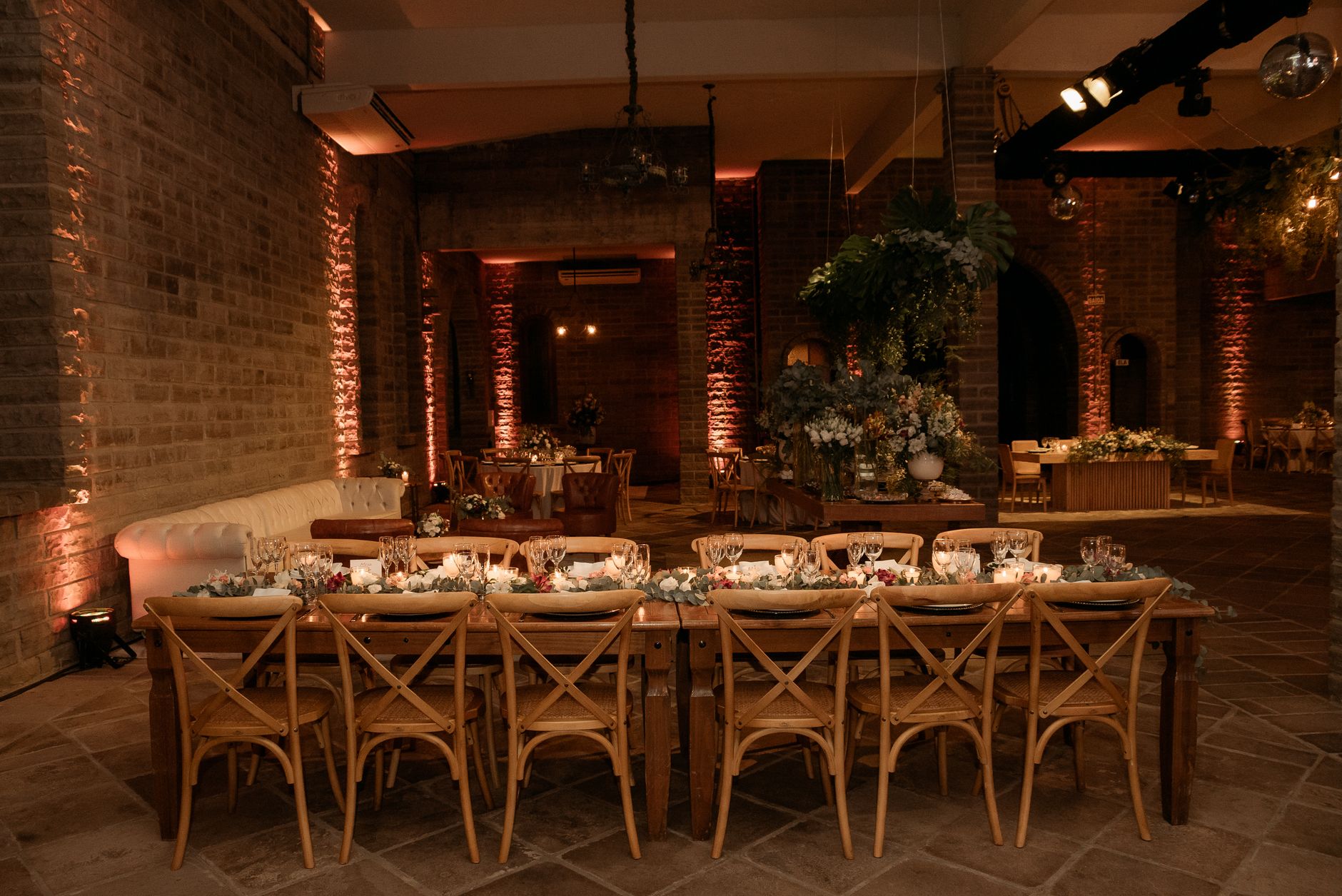
The experience begins before anyone enters the room. I learned this precisely on a Tuesday evening in November 2021, standing outside a private dinner in a converted warehouse in East London. Around forty guests had been invited by handwritten card, delivered by courier, sealed with unscented beeswax. I watched people arrive already softened, already leaning in. They hadn't tasted the food or heard the music yet. But something had already happened to them. The envelope had done its work.
What we tend to call 'atmosphere' at an event is usually the accumulation of sensory details in the room: the temperature of the lighting, the weight of the glassware, the smell of warm wood or fresh linen. But atmosphere is also manufactured in the days and hours before arrival. The invitation is not preamble. It's the first room guests walk through. And in my experience curating invitation-only events across London, Istanbul, and Los Angeles over the past decade, the quality of that first room determines almost everything that follows.
Before the Door Opens: Expectation as the First Design Material
There's a concept in cognitive psychology called predictive processing, the idea that the brain constantly generates predictions about incoming sensory experience and then measures reality against those predictions. The gap between prediction and reality is where emotion lives. Nature Reviews Neuroscience has published extensively on how the brain's anticipatory states shape the emotional valence of an experience once it arrives. What this means for event design is uncomfortable but clarifying: you are not designing for what guests encounter, you are designing for the distance between what they expected and what they find.
This is why an invitation-only event with a mediocre room can still feel transcendent, and why a technically flawless public event can feel flat. The open event offers no frame. The private one has already been shaping perception for days. The guest who received a card on thick cotton paper, who turned it over twice before opening it, who noticed the slight indentation of the letterpress type, has already begun a kind of sensory rehearsal. They arrive primed. Their nervous system is oriented toward experience. That's not magic. That's design, operating on a longer timeline than most people think to use.
In my work with smaller, curated gatherings, I've seen this pattern consistently: the more intentional the pre-arrival communication, the more generously guests interpret ambiguity once they're inside. A rough edge that might read as 'unfinished' at a public venue reads as 'deliberate' when the invitation has already established that this is a house of considered decisions. The envelope sets the interpretive frame. Everything inside it is read through that frame.
The Ritual Object and What It Promises
A physical invitation is a ritual object. That phrase sounds precious, but the function is practical. Ritual objects slow us down. They ask for a moment. You can't scroll past a wax-sealed envelope the way you dismiss a calendar notification. The physical form creates a micro-interruption in the day, and that interruption is the first beat of the experience you're curating. Journal of Cross-Cultural Psychology (2017) found that ritualistic behaviors before consumption, including something as simple as unwrapping, measurably increased enjoyment of the thing consumed. The act of opening is already part of the event.
I'm not 100% sure this works for everyone, and honestly my friend Yasmine, who runs a small gallery in Shoreditch, tried the full courier-delivered card situation for a preview evening last spring and half her guests texted asking if they were in some kind of scam. So there's a real tonal alignment problem you can run into, where the formality of the object doesn't match the brand or the community you're reaching. I've made versions of this mistake myself, specifically a hand-stitched booklet invitation for a fairly casual studio party in 2019 that made people dress up when the vibe was definitely more paint-stained jeans. The object promises something. Make sure it promises the right thing.
The specifics matter more than the expense. A card printed on heavy uncoated stock with a single typeface and a handwritten name in the recipient's actual ink communicates more care than an elaborate printed piece that was clearly identical across three hundred envelopes. Personalization at the point of first contact is a form of curation. It signals to the guest that they were chosen, not simply included. That signal is the emotional foundation of every subsequent moment at your event.
Scarcity, Access, and the Ethics of Exclusion
Let's be honest about the less comfortable part of this. Invitation-only events are structurally exclusive, and that exclusivity is doing emotional work. Journal of Consumer Psychology (2014) documented how perceived scarcity reliably increases the subjective value of an experience. When people believe access is limited and that they are among those selected to receive it, enjoyment increases measurably. This isn't a cynical manipulation. It's a feature of how human social cognition works. But it comes with a real ethical obligation.
The common misconception is that exclusivity is primarily about prestige or brand positioning. It isn't, at least not in the kind of work I care about. Exclusivity at its best is about coherence. A room of forty people who share a genuine context, a community, a set of references, or a creative practice, creates a social atmosphere that a room of four hundred strangers simply cannot replicate. The intimacy is not manufactured. It's a natural consequence of the selection. The invitation-only format, when used honestly, is a tool for assembling the right conditions for something real to happen between people.
Where this gets genuinely difficult is when the curation serves aesthetics over ethics, when the 'coherent community' turns out to be demographically narrow in ways the curator hasn't examined. I've sat with this discomfort in my own practice, particularly when client briefs emphasize 'exclusivity' as a brand value without specifying what the community actually is. The envelope should represent a door into something specific and alive, not a gate keeping people out of something generic and anxious about its own status. These are different projects. They look similar from outside but they feel entirely different once you're in the room.
“Kani Sedighi on the psychology of expectation at invitation-only events - how anticipation, scarcity, and atmosphere shape memory before guests arrive.”
The Moment Before the Music Starts: Designing the Threshold
There's a specific weight to the silence before the first note of music at a private event. Not the silence of a room that hasn't started yet. The silence of a room that is about to. I've stood in that silence maybe two hundred times and it never feels routine. It's the moment when expectation reaches its maximum pressure. The guest has moved through every prior ritual: the card, the RSVP, the approach, the coat check, the first glass, the first conversation. They're in the room now. Something is about to happen. Everything you've built through the pre-arrival experience converges in that silence.
The threshold moment, the crossing from 'arriving' to 'arrived,' deserves its own design logic. What does the guest sense first when they enter? Not see. Sense. Temperature, smell, and sound register before the eye has properly focused. A room that's fractionally warmer than the corridor outside signals intimacy. A scent that is singular and not-quite-identifiable (not a branded diffuser, not a generic candle) creates immediate curiosity. A sound level that requires the guest to lean slightly toward their companion shifts the social dynamic toward closeness. None of these things cost more than thought. All of them operate below conscious awareness. Design at this level is design that guests can't explain, which means they attribute it to the event's quality rather than its craft.
And here's the thing... most event producers spend the bulk of their budget and attention on the middle of the evening. The arrivals moment is treated as logistics. But the arrivals moment is where the neurological frame for the entire experience is established. What a guest feels in the first four minutes in a room is, in most cases, what they'll report feeling about the whole evening when they describe it to someone the next day. The memory doesn't average across the night. It anchors on the peaks and the beginning. This is consistent with what psychologists call the peak-end rule, and it's one of the most underused pieces of knowledge in event design. You can build the rest of the evening with more freedom once you've secured those first four minutes.
So the last image I want to leave you with is this: a guest lifting a heavy card from a courier-delivered envelope at seven in the evening, three days before they'll walk through your door. They turn it over once. They notice the wax is a particular shade of amber. They don't know why that matters. It already does.
Before your next invitation goes out, hold it in your hands and ask what it promises. Not aesthetically. Emotionally. Does the weight of the paper match the weight of the experience you're building? Does the typeface have the same temperature as the room you're designing? If the object and the event are in true alignment, you've already given your guest something before they've crossed the threshold. Start there. The room will follow.
Kanona Projects is for curious minds who believe a gathering can be more than a social obligation. The people who show up wanting to feel something different - and leave carrying a memory they did not expect.